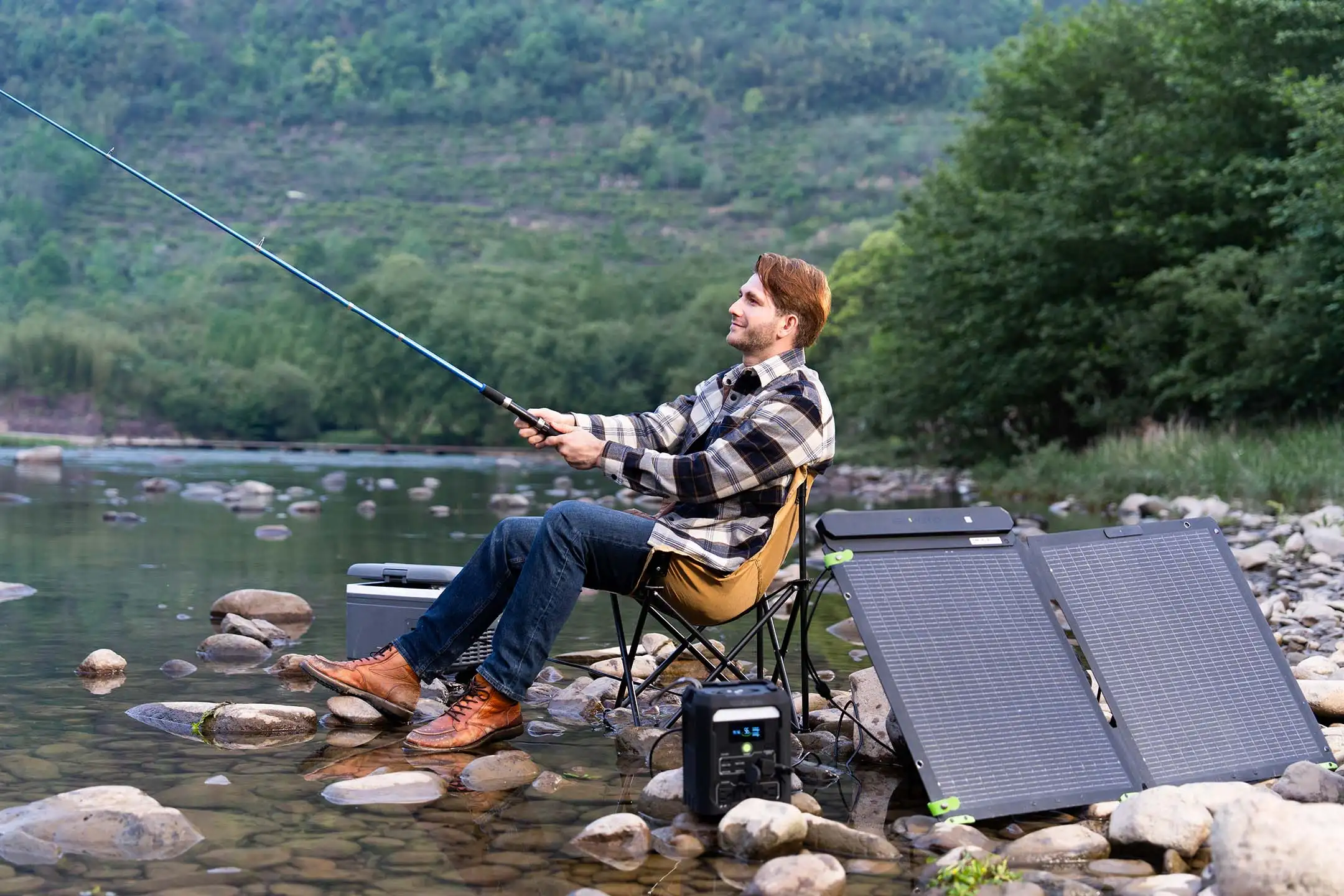
Fishing is no longer limited to a rod, tackle box, cooler, and a few basic supplies. Modern outdoor enthusiasts often bring smartphones, fish finders, cameras, GPS devices, LED lights, portable speakers, electric coolers, and other electronic equipment on fishing trips. Having a dependable source of portable electricity can make these trips more convenient and comfortable. A power station can provide that energy without requiring fuel, excessive noise, or complicated setup.
Choosing the best portable power station for fishing depends on more than battery capacity. Anglers should consider portability, charging options, power output, battery chemistry, durability, runtime, and the specific equipment they plan to operate. Understanding these factors can help outdoor enthusiasts select a power station that fits their fishing style and environment.
Why a Portable Power Station Is Useful for Fishing
Fishing trips can last several hours or even multiple days, especially when camping near a lake, river, or remote shoreline. Access to conventional electrical outlets may be limited or completely unavailable. A portable power station provides stored electrical energy that can be used wherever the trip takes you.
One of the biggest advantages is convenience. A charged power station can keep mobile phones, GPS devices, fish finders, cameras, and lighting equipment operating throughout the day. For longer trips, it can also support larger devices such as portable refrigerators or coolers, depending on its output capacity.
Unlike traditional fuel generators, battery-powered stations generally operate quietly. This is particularly valuable while fishing because excessive noise can make a peaceful outdoor environment less enjoyable and may interfere with conversations or the overall fishing experience.
Consider Battery Capacity
Battery capacity is one of the most important specifications to evaluate. It is commonly measured in watt-hours (Wh), indicating approximately how much energy the battery can store.
Smaller power stations may be suitable for anglers who primarily need to charge phones, watches, cameras, or small lights. Medium-capacity models can provide more energy for fish finders, laptops, portable speakers, and other equipment. Larger units may be appropriate for extended fishing trips or camping situations where users need to operate refrigerators, electric coolers, or several devices simultaneously.
However, bigger capacity usually means greater weight and size. The ideal balance depends on whether you are fishing from a vehicle, boat, dock, or hiking to a remote location.
Check the Power Output
Battery capacity tells you how much energy a station stores, but output determines what devices it can actually operate. Look at the continuous wattage rating and the maximum or surge output.
For simple electronics, a modest output may be sufficient. Devices with motors or compressors, such as certain coolers and refrigerators, can require considerably more power when starting. If you intend to operate several devices at once, calculate their combined wattage requirements.
The best portable power station for fishing should offer enough output for your essential equipment while leaving some additional capacity. Avoid choosing a unit that operates continuously near its maximum rating because this can limit flexibility during your trip.
Portability Matters on Fishing Trips
Fishing locations are not always easy to access. You might need to carry equipment from a parking area to a riverbank or move supplies around a boat. For that reason, physical size and weight are important considerations.
A compact power station with a comfortable handle can be easier to transport than a large, heavy model. Anglers who travel by car or boat may have fewer concerns about weight, while backpack fishermen should prioritize lightweight designs.
Think about your complete setup before purchasing. A power station is only one part of your gear, and carrying a heavy battery alongside fishing equipment, food, water, and camping supplies can quickly become inconvenient.
Look for Multiple Charging Options
Flexible charging can make a major difference during longer outdoor adventures. Many modern power stations can be charged through standard AC outlets before leaving home, while some also support vehicle charging.
Solar charging is another useful option for outdoor enthusiasts. With compatible solar panels, anglers can potentially replenish the battery during daylight hours without relying on a wall outlet. Solar charging speed depends on panel wattage, sunlight conditions, battery state, and the power station’s input limits.
A model with multiple charging methods gives users more flexibility. You can charge it at home, top it up from a vehicle during travel, and use solar energy when spending extended periods outdoors.
Evaluate Battery Technology
Battery chemistry affects performance, lifespan, weight, and overall value. Many newer portable power stations use lithium iron phosphate, commonly called LiFePO4, batteries. These batteries are known for their long cycle life and stable performance.
Battery longevity is especially important for outdoor equipment that may be used repeatedly over several seasons. Instead of focusing only on the initial price, consider how frequently you expect to use the power station and how long you want it to remain useful.
It is also worth checking the manufacturer’s stated cycle-life expectations, charging specifications, and warranty terms before making a purchase.
Examine the Available Ports
A fishing power station should provide the connections required by your equipment. Common options include AC outlets, USB-A ports, USB-C ports, and 12-volt DC outputs.
USB-C can be especially convenient for modern smartphones, tablets, cameras, and other electronics. DC outputs may be useful for compatible coolers and automotive-style equipment. AC outlets provide broader compatibility but may involve additional energy loss when converting battery power to household-style AC electricity.
Consider making a list of everything you normally bring fishing. Check each device’s charging method and power requirements, then select a station with enough suitable ports.
Durability and Outdoor Design
Fishing environments can expose equipment to moisture, dust, dirt, and accidental impacts. A power station does not necessarily need to be completely waterproof, but outdoor enthusiasts should examine its construction and environmental protection features.
A sturdy housing, protected ports, secure covers, and a stable base can all be useful. However, users should always follow the manufacturer’s instructions regarding water exposure. Even a rugged portable power station should be kept protected from rain, splashes, and standing water unless it is specifically rated for those conditions.
Good handling practices can significantly extend the life of the equipment.
Runtime and Energy Efficiency
Knowing how long a power station can run your equipment is more useful than simply looking at its battery capacity. Actual runtime depends on the device’s wattage, conversion losses, battery condition, temperature, and other factors.
For example, a low-power LED light may operate for a very long time compared with a high-consumption electric cooler. Devices that cycle on and off can also have different energy requirements than equipment that runs continuously.
To estimate runtime, divide the usable watt-hours by the device’s approximate wattage, while remembering that real-world results are usually lower because of efficiency losses.
Display, Controls, and Safety Features
A clear display can make outdoor power management much easier. Look for a screen that shows remaining battery percentage, input power, output power, and charging status.
Useful safety features may include protection against overcharging, overheating, short circuits, excessive current, and deep discharge. These systems can help protect both the power station and connected equipment.
Simple controls are also valuable when you are outdoors. You should be able to quickly identify which ports are active and monitor energy consumption without navigating complicated settings.
Choosing the Right Size for Your Fishing Style
There is no single power station that is perfect for every angler. A person who spends a few hours fishing from shore may only need a compact battery for a phone, camera, and lights. Someone who spends several days camping near a lake may require significantly more capacity.
Boat fishermen may prioritize AC outlets and multiple charging ports, while backpack anglers may focus heavily on weight. Those using advanced fish-finding electronics may want reliable DC outputs and enough reserve capacity for an entire day.
The best choice is therefore the model that matches your actual equipment and trip duration rather than simply the one with the largest battery.
Final Thoughts
Finding the best portable power station for fishing requires balancing capacity, output, portability, charging flexibility, durability, battery technology, and safety features. The right unit can keep essential electronics charged, provide lighting after sunset, support compatible coolers, and make longer outdoor adventures more comfortable.
Before buying, identify the devices you need to power, estimate their energy requirements, consider how far you will carry the station, and decide whether solar or vehicle charging is important. With those factors in mind, outdoor enthusiasts can choose a dependable portable power solution that complements their fishing setup without adding unnecessary weight or complexity.