Introduction
High-frequency transformer technology has become a cornerstone of modern inverter power supply systems, enabling efficient energy conversion across industries such as renewable energy, telecommunications, electric vehicles, and industrial automation. As the demand for compact, energy-efficient, and high-performance systems grows, the development of advanced transformer cores has gained significant attention. In particular, the evolution of the low-loss high-frequency transformer core for inverter applications is reshaping how power systems operate, reducing energy waste while enhancing reliability and performance.
The Role of High-Frequency Transformer Cores in Inverter Systems
Inverter power supply systems convert direct current (DC) into alternating current (AC), often at varying frequencies depending on application requirements. High-frequency transformers are critical in this process, as they enable voltage transformation, electrical isolation, and improved efficiency at elevated switching frequencies.
Unlike traditional transformers that operate at low frequencies (50–60 Hz), high-frequency transformers typically function in the kilohertz (kHz) to megahertz (MHz) range. This allows for smaller core sizes, reduced weight, and improved power density. However, operating at such high frequencies introduces challenges such as increased core losses, heat generation, and electromagnetic interference.
To address these challenges, manufacturers have focused on developing low-loss high-frequency transformer core for inverter systems that can maintain efficiency while handling higher switching speeds.
Materials Innovation in Transformer Core Design
One of the most significant advancements in high-frequency transformer cores lies in material science. Traditional silicon steel cores are no longer suitable for high-frequency applications due to their high hysteresis and eddy current losses. Instead, modern cores use advanced materials designed to minimize energy dissipation.
Ferrite Materials
Ferrite cores are widely used in high-frequency transformers due to their high electrical resistivity and low eddy current losses. Innovations in ferrite composition have led to improved permeability, lower core loss, and better thermal stability. These improvements make ferrites a popular choice for a low-loss high-frequency transformer core for inverter systems.
Nanocrystalline Alloys
Nanocrystalline materials have emerged as a breakthrough in transformer core technology. These materials offer extremely low core losses, high magnetic permeability, and excellent temperature performance. Their fine grain structure allows for efficient magnetic flux control, making them ideal for high-performance inverter applications.
Amorphous Metals
Amorphous metal cores provide another innovative solution. With a non-crystalline atomic structure, these materials significantly reduce hysteresis losses. They are particularly effective in applications requiring high efficiency and energy savings, contributing to the development of advanced low-loss high-frequency transformer core for inverter systems.
Design Enhancements for Efficiency and Performance
Beyond material selection, transformer core design has undergone substantial innovation to meet the evolving demands of inverter systems.
Core Geometry Optimization
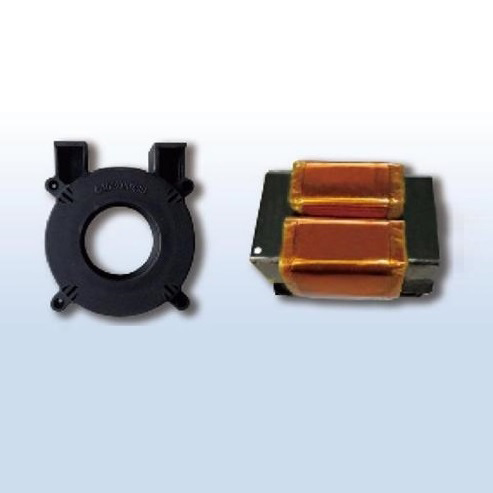
Modern transformer cores are designed with optimized shapes such as E-cores, toroidal cores, and planar cores. These geometries help minimize magnetic leakage, improve flux distribution, and reduce losses. Planar transformers, in particular, are gaining popularity due to their compact design and suitability for high-frequency operation.
Reduced Core Loss Techniques
Engineers are implementing advanced techniques to reduce core losses, including improved lamination methods, thinner core sheets, and precision manufacturing processes. These innovations ensure that the low-loss high-frequency transformer core for inverter applications operates efficiently even under demanding conditions.
Thermal Management Integration
As frequency increases, heat generation becomes a critical concern. Modern transformer cores are designed with enhanced thermal management features, including better heat dissipation paths and integration with cooling systems. This ensures long-term reliability and prevents performance degradation.
Impact of Switching Technologies
The advancement of semiconductor switching devices, such as MOSFETs and IGBTs, has significantly influenced transformer core innovation. With the rise of wide-bandgap semiconductors like silicon carbide (SiC) and gallium nitride (GaN), inverter systems can operate at even higher frequencies.
This shift has increased the demand for low-loss high-frequency transformer core for inverter designs that can keep up with faster switching speeds without incurring excessive losses. As a result, core materials and designs are being continuously refined to match the capabilities of modern power electronics.
Applications Driving Innovation
Several industries are driving the need for improved high-frequency transformer cores, each with unique requirements.
Renewable Energy Systems
Solar inverters and wind energy systems rely heavily on efficient power conversion. High-frequency transformers enable compact inverter designs while maximizing energy output. The use of a low-loss high-frequency transformer core for inverter systems helps reduce energy losses and improve overall system efficiency.
Electric Vehicles (EVs)
Electric vehicles require efficient onboard chargers and power converters. High-frequency transformers play a key role in these systems by reducing size and weight while maintaining performance. Innovations in core materials and design are essential for meeting the stringent efficiency standards of EV applications.
Telecommunications and Data Centers
In telecom and data center environments, power efficiency and reliability are critical. High-frequency transformer cores help ensure stable power delivery while minimizing energy consumption. Advanced low-loss high-frequency transformer core for inverter solutions contribute to reduced operational costs and improved system uptime.
Industrial Automation
Modern industrial systems rely on precise and efficient power control. High-frequency transformers enable better performance in motor drives, robotics, and automation systems. Their compact size and high efficiency make them ideal for space-constrained industrial environments.
Future Trends in Transformer Core Technology
The future of high-frequency transformer cores is shaped by continuous innovation in materials, design, and manufacturing processes.
Integration with Digital Design Tools
Advanced simulation and modeling tools are enabling engineers to design transformer cores with unprecedented precision. These tools allow for accurate prediction of core losses, thermal behavior, and electromagnetic performance, leading to optimized low-loss high-frequency transformer core for inverter applications.
Hybrid Material Solutions
Researchers are exploring hybrid core materials that combine the benefits of ferrite, nanocrystalline, and amorphous alloys. These solutions aim to achieve superior performance across a wide range of frequencies and operating conditions.
Increased Focus on Sustainability
Sustainability is becoming a key consideration in transformer core design. Manufacturers are developing eco-friendly materials and processes to reduce environmental impact. High-efficiency cores not only save energy but also contribute to lower carbon emissions.
Miniaturization and Integration
As electronic devices become smaller and more powerful, the demand for compact transformer cores continues to grow. Innovations in planar and integrated transformer designs are paving the way for smaller, lighter, and more efficient inverter systems.
Conclusion
The evolution of high-frequency transformer core technology is transforming inverter power supply systems across industries. Through advancements in materials, design, and manufacturing, engineers are overcoming the challenges associated with high-frequency operation. The development of the low-loss high-frequency transformer core for inverter applications is at the forefront of this progress, enabling higher efficiency, reduced energy consumption, and improved system performance.