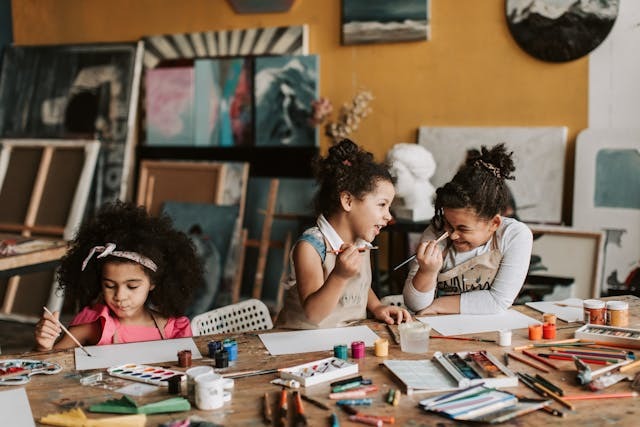
Children often have big feelings but few words. Drawing bridges this gap. It helps kids share what is inside their hearts. Let us see how this works.
Feelings Are Hard to Explain
Adults sometimes struggle to describe feelings. For children, it is even harder. They may not know the right words.
A young child might not be able to say “I feel anxious.” But they can draw a picture of a worried face. The drawing speaks when words cannot.
Pictures Show What Words Cannot
Some feelings are too big or confusing for words. Drawing lets kids show these complex emotions.
A child might draw a storm to show anger. They might draw a tiny person to show they feel small. Pictures capture feelings in ways words miss.
A Gentle Way to Open Up
Talking about feelings can be scary. Drawing feels safer. Kids can share through art first.
After drawing, talking becomes easier. A child might say, “This is me feeling sad.” The picture starts the conversation.
Understanding Their Own Emotions
Sometimes kids do not know what they feel. Drawing helps them discover it. As they create, feelings become clearer.
A child might start drawing without knowing why. The finished picture reveals their hidden feelings. Art helps kids understand themselves.
Sharing Difficult Experiences
Bad things sometimes happen to children. Talking about them directly is very hard. Drawing offers a gentler path.
A child can draw what happened. Adults can see and understand. Then careful conversations can follow. Drawing opens the door.
Showing Happiness Too
Drawing is not just for hard feelings. Kids also draw when they are happy, excited, or proud.
Bright colors and smiling figures show joy. A picture of a birthday party shows excitement. All emotions can flow onto paper.
Building Trust with Adults
When adults look at children’s drawings with care, trust grows. Kids feel heard and valued.
Taking time to ask about drawings shows you care. This builds a strong connection. Children learn they can share with you.
How to Encourage Emotional Drawing
Here are ways to help your child:
- Provide supplies. Keep paper and colors ready anytime.
- Ask open questions. “Tell me about your picture” works better than “What is that?”
- Listen without judging. Accept whatever they share.
- Do not fix or change their art. Let it be theirs alone.
- Draw with them. Share your own feelings through art.
Watch for Messages
Pay attention to what your child draws. Repeated dark colors or scary images might signal problems. Happy, colorful art usually shows good feelings.
If drawings worry you, talk gently with your child. You might also ask a counselor for help. Drawings are windows into children’s hearts.
Every Drawing Matters
When your child hands you a drawing, they are sharing a piece of themselves. Treasure these gifts.
Drawing helps kids say what they cannot speak. It is a powerful tool for communication. Encourage your child to draw often. Their feelings will flow freely onto the page.