If plants grown from feminized seeds ended up full of seeds, something supplied pollen. Usually one of your plants grew a few male flowers under stress, or pollen drifted in from outside. Knowing when in the grow it happened tells you how to prevent it next time.
First, Confirm What Happened
Look closely at the buds and the nodes where branches meet the stem. Small banana-shaped anthers or little pollen sacs mean the plant pollinated itself. Researchers studying hermaphroditic cannabis found these anthers in leaf joints and tucked inside female flower buds.¹ If you can’t find any anthers and the seeds are spread evenly, outside pollen from a male, a hermie in another tent, or a reversed donor plant is the more likely source.
The good news: seeds a female makes with her own pollen are genetically female.¹ The bad news: they may share their mother’s tendency to hermie.
Stress Points Along the Feminized Seed to Harvest Time Line
Growing conditions can push a genetic female to make male flowers. Researchers list temperature, light schedule, light conditions, nutrient shortages and physical damage as triggers.² Here’s where those risks tend to show up:
| Stage | Common stress | What to check |
|---|---|---|
| Seedling and veg | Heat, overwatering, root-bound pots | Steady temperature, pot size |
| The flip to bloom | Light leaks, irregular schedule | A truly dark night period |
| Early to mid bloom | Nutrient burn or deficiency, pests | Feeding strength, leaf color |
| Late bloom | Heat from lights, broken branches, waiting long past ripeness | Canopy temperature, harvest timing |
Late Bloom: The Most Common Window
Many growers first spot anthers in the final weeks. By then the plant has been flowering for a long time, and stress has added up. Light leaks during the dark period are a classic cause, because they disrupt the signal that keeps a short-day plant in bloom.³ Leaving plants well past ripeness can also bring out late male flowers. Harvesting on time removes that window.
How Genetics Shape the Feminized Seed to Harvest Time Risk
Not every plant reacts to stress the same way. Sex expression in cannabis is partly inherited, and the absence of a Y chromosome isn’t the only thing that keeps male flowers off a female.² A 2024 review of feminized seed listed male flowers in offspring as a key challenge.⁴ It often traces back to how the seed was made. Seed from a donor that hermied under stress is more likely to repeat it. Seed from a stable donor that was deliberately reversed starts with better odds.
Protecting Your Next Feminized Seed to Harvest Time Run
Keep the grow steady: stable temperatures, a light-tight dark period, moderate feeding and careful handling. Inspect nodes weekly from mid-bloom onward and remove any anthers right away. If you make your own seed, start with a female that stayed fully female, and reverse her under control.
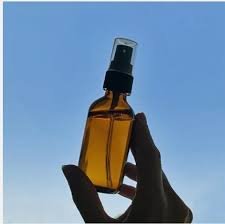
Gender Bender STS Spray from California Plant Science is built for that controlled step. It’s a ready-to-use STS and colloidal silver hybrid designed for one application on the day you flip to bloom, about 50 pumps on a 12–18 inch plant. It’s also formulated for a 24-month shelf life.
Map out your feminized seed to harvest time plan before your next run. Wear gloves, keep treated donors for pollen only, and flower them away from the main crop.
Footnotes
- Punja ZK, Holmes JE. Frontiers in Plant Science 11 (2020): 718. doi:10.3389/fpls.2020.00718
- Flajšman M, Slapnik M, Murovec J. Frontiers in Plant Science 12 (2021): 718092. doi:10.3389/fpls.2021.718092
- Toth JA, Stack GM, Carlson CH, Smart LB. Frontiers in Plant Science 13 (2022): 991680. doi:10.3389/fpls.2022.991680
- Timoteo Junior and Oswald. Frontiers in Plant Science 15 (2024): 1384286. doi:10.3389/fpls.2024.1384286